 Valebound
How to make a Christmas budget (with a printable planner)
Christmas arrives on the same date every year, and it can still surprise the January budget. A pile of reasonable purchases (a gift, extra groceries, travel, wrapping, delivery fees) can wipe out the money you meant to save. A Christmas budget is a cap you decide in advance, split into a few categories, and track as you spend.
What belongs in the budget
Gifts are usually the largest line, and almost never the only one. Before you set a number, list the spending you already know will show up:
- Gifts: household, family, friends, colleagues, teachers, and anyone you tend to remember late
- Food and hosting: grocery extras, a meal you host, baking, drinks
- Travel: fuel, tickets, parking, or a night away
- Decorations and wrapping: only what you plan to buy this year, plus paper, bags, tape and stamps
- Charity, hosts and a buffer: collections, a host gift, delivery fees, a forgotten group gift
Give each cost a category, plus a small buffer. Last December's statements are more honest than memory.
Step 1. Set a total cap you can fund
Start with the money, not with the wish list. A useful cap is what you can set aside before the last shopping day without touching rent, regular groceries, minimum debt payments, or your emergency fund. It does not come from a credit limit.
Write down what you already have set aside, plus what you can still move before mid-December. Divide what you still need by the weeks or paydays left. If that weekly figure does not fit, lower the cap before shopping starts.
Step 2. Split the cap into categories
Give each category a planned amount before you write a single gift idea, or the list will expand until the other categories have nothing left. There is no required split. A year you host will need more in food. A year you travel will need more in travel, and the gift line has to make room. The amounts must add up to the total and not a dollar more. The buffer is for things you did not plan for, not a second shopping fund. If one category grows, another has to shrink, in writing, the same day.
Step 3. Write a gift list with a cap for each person
Once the gift category has a number, split it across the people on your list. Use five columns: Person, Cap, Idea, Spent, and Done. List every name you expect to buy for, and assign caps that add up to the gifts category. If they do not fit, cut a name, lower a cap, or switch to a group gift, before you shop.
A worked example
The figures below are an example for a made-up household, not a recommended budget. They are in US dollars. You can use the same shape in pounds or any other currency.
This household can set aside $850 for the whole holiday, after bills are covered. They already have $250 saved, with four weeks of paydays left before mid-December.
| Category | Planned (example) |
|---|---|
| Gifts | $375 |
| Extra food and hosting | $200 |
| Travel | $160 |
| Decorations | $40 |
| Wrapping, postage and cards | $35 |
| Buffer | $40 |
| Total | $850 |
$375 + $200 + $160 + $40 + $35 + $40 = $850. They still need $600. Over four weeks, that is $150 a week, moved on payday into a separate account or envelope. If $150 a week does not fit, they would cut the plan now: a simpler meal, a shorter trip, or a lower gift line, before any shopping starts.
The $375 gift line is the cap for every present, including tax and shipping. If travel comes in at $185, the extra $25 comes out of the buffer, or out of another category, the same day. The $850 total does not change.
Track spending and where the money will live
Write each holiday purchase down the day you make it, with the category and the full amount, including tax and shipping. Once a week, compare planned against spent and write what is left. When a category is spent, spending in that category stops. Leftover money can move to a category that is short, on paper, not by raising the total. Pay with money you already have, or with a card you can pay off in full.
Pick one home for the Christmas total and keep it separate from everyday spending. If you still have months, or you are planning next year, name a holiday sinking fund, set a target and a date, and contribute on payday. If you have weeks rather than months, divide what is left by the paydays remaining, and move that figure when the money arrives. Do not fund Christmas from an emergency fund. Christmas is predictable. An emergency fund is for costs you cannot already name.
A free tracker you can print
Valebound's free holiday spending tracker is a one-page printable with space for the budget, the actual spend and what is left, plus a purchase log. It comes in US Letter and A4, and there is no email sign-up. For the gift list itself, the free Christmas gift budget tracker has a line for each person so the list and the gifts category stay in step.
The aim is that the week of the 25th does not have to borrow from January.
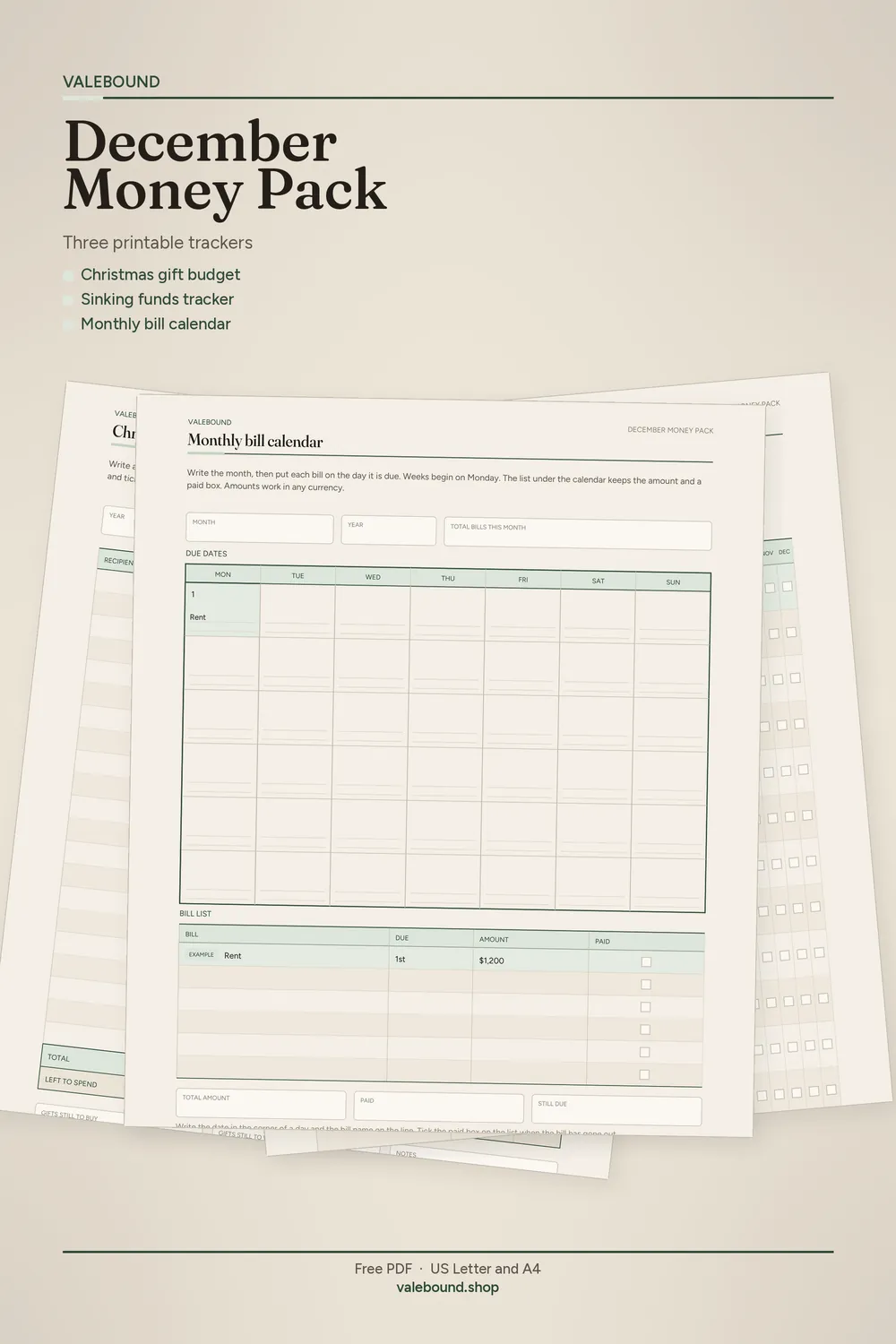
Free December Money Pack: three printable trackers for gifts, sinking funds and bills, sent to your inbox
Enter your email on the next page. The pack is sent to that inbox. You can unsubscribe at any time.
Get the free pack